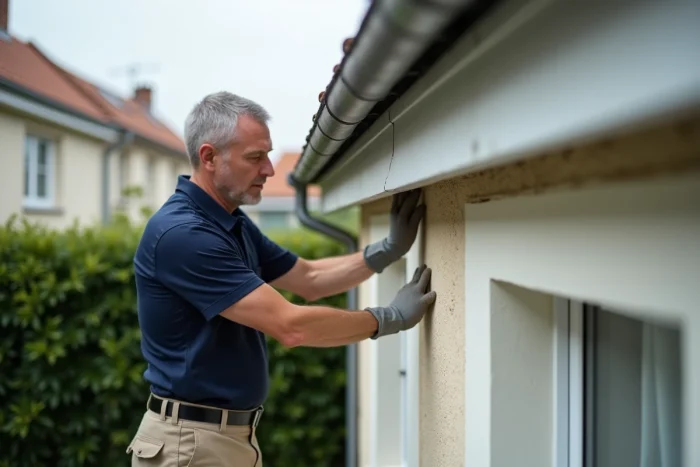
A PVC bird guard protects the under-roof from bird and rodent intrusions, as well as from moisture and drafts. Over time, dust, moss, and plant debris accumulate on these elements exposed to the elements. Regular maintenance of the PVC bird guard helps preserve its protective properties and visual appearance for many years.
What really damages a PVC bird guard in under-roof
Have you noticed greenish stains or blackish deposits on the PVC cladding located under your roof overhang? These marks are not just aesthetic. They indicate the beginning of biological colonization that can compromise the ventilation of the attic.
PVC naturally resists UV rays and weather, which explains its popularity for bird guards. But this resistance does not make it invulnerable. Three mechanisms gradually degrade the surface.
- Moss and lichens settle in shaded and damp areas, particularly on the north side of the roof. Their root system creates micro-roughness that retains even more water.
- Bird droppings contain uric acid. As they dry, they adhere to the PVC and can leave permanent stains if not removed within weeks.
- Plant debris (leaves, pine needles, samaras) accumulates in the joints between the cladding boards and the tiles, creating blockages that prevent air circulation. Without ventilation, moisture stagnates and encourages the growth of fungi in the attic.
Understanding these mechanisms changes the way maintenance is approached: it is not about scrubbing for aesthetics, but about maintaining air circulation and waterproofing. To learn everything about PVC bird guards, the stakes go far beyond mere aesthetic concerns.
Cleaning the PVC bird guard: suitable methods and products
Cleaning is the most frequent maintenance operation. Once or twice a year is sufficient in most cases, with an additional cleaning after autumn if trees overhang the roof.
Recommended equipment
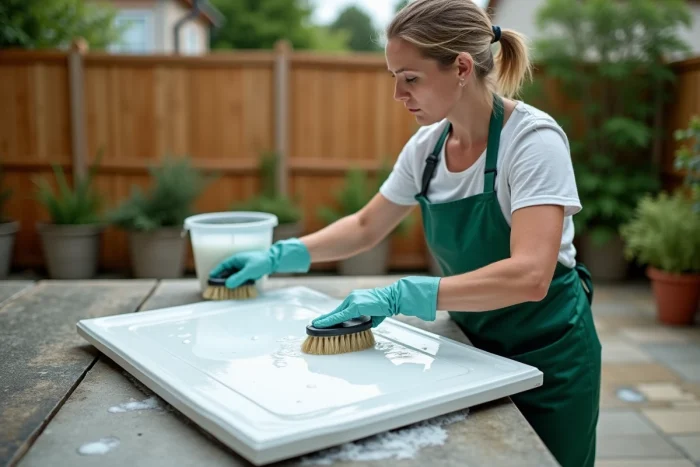
Forget the pressure washer. The force of the jet can deform thin PVC boards or force water into the gaps between the bird guard and the framework. A bucket of warm water, a soft brush with a telescopic handle, and a microfiber cloth will do the job safely.
For the cleaning product, a mixture of warm water and Marseille soap effectively removes most common dirt. Diluted white vinegar works well on limescale stains left by rainwater. Harsh solvents (acetone, white spirit) should be avoided: they attack the PVC’s finish and accelerate yellowing.
The correct cleaning sequence
Start by removing solid debris by hand or with a dry brush. Leaves stuck in the joints can be dislodged with a thin, flat tool, such as a plastic spatula. Then apply the soapy mixture with the soft brush, scrubbing in the direction of the boards. Rinse with clear water using a low-pressure hose. Dry accessible areas with a cloth to avoid water spots.
Always clean from top to bottom so that dirty water does not run down onto already clean areas. This simple reflex prevents having to redo the same panel twice.
Annual inspection of the bird guard’s fasteners and joints
Cleaning is visible, but technical inspection is what truly protects the durability of the installation. Each year, ideally in spring, take the time to examine three specific points.
First, check that all the boards remain properly fitted. Wind, temperature variations, and vibrations from the roof can gradually disengage the boards from their fixing rail. A board misaligned by a few millimeters is enough to create a passage for birds.
Next, examine the condition of the clips or fixing screws. PVC expands and contracts with heat. Fixings that are too rigid can end up cracking or tearing the material. If you spot a screw whose head has penetrated the board, replace it with a wide-headed screw with a washer.
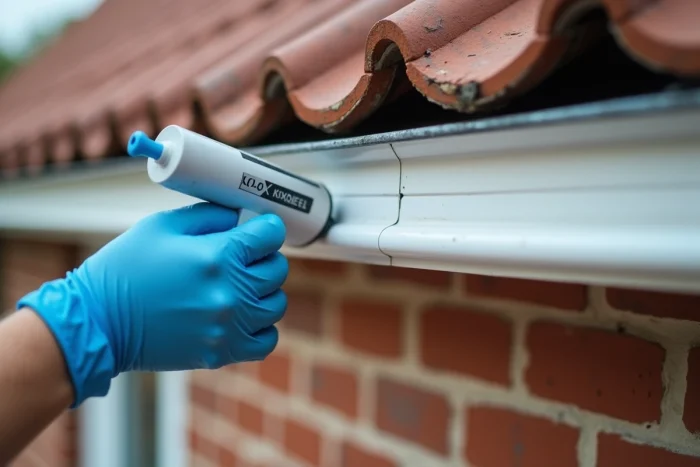
Finally, check the sealing joints between the bird guard and the facade. This is often where the first leaks appear, especially on walls exposed to heavy rain. An exterior silicone sealant joint, compatible with PVC, can seal a crack before it becomes a serious problem.
Signs of wear that necessitate replacement rather than repair
PVC has a long lifespan, but it is not unlimited. Certain signals indicate that partial or total replacement becomes more relevant than yet another cleaning.
A pronounced yellowing that does not come off with cleaning indicates irreversible degradation of the surface. The PVC has lost its protective anti-UV layer and will continue to degrade at an accelerated rate. Repainting a yellowed PVC bird guard only offers a temporary reprieve, as paint adheres poorly to an altered surface.
Cracked or broken boards must be replaced individually. The good news: PVC cladding systems for bird guards use standardized profiles. A new board fits into the existing rail without dismantling the entire covering.
If you notice signs of moisture on the framework visible from the attic, the bird guard is no longer fulfilling its waterproofing role. In this case, the inspection should extend to the entire under-roof, including the intrusion-proof mesh located behind the boards, which may be torn or detached.
A well-maintained PVC bird guard retains its protective and ventilation properties for many years. The most cost-effective action remains biannual cleaning coupled with an inspection of the fasteners in spring. Replacing an isolated board costs little, repairing a framework damaged by moisture costs a lot.