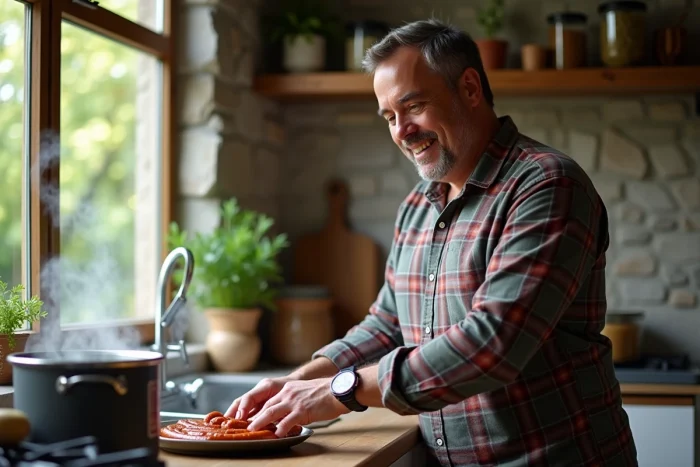
A simple microwave pass, even brief, can turn juicy merguez into rubbery bites. Yet, certain reheating methods preserve both flavor and tenderness, provided specific parameters are respected.
The choice of method, temperature control, and ambient humidity play a crucial role in the final result. A few adapted gestures are enough to avoid dryness and preserve all the taste qualities of these already cooked sausages.
Why chipolatas dry out easily during reheating
The chipolata remains a delicate product, shaped by the balance between proteins, fat, and water. From the first cooking, the casing tightens, and the meat firms up. But during a second exposure to heat, every minute counts: temperature becomes the enemy of tenderness. An oven that is too hot, a microwave that is too rushed, and up to 45% of the initial weight evaporates. As a result, the sausage dries out, and the pleasure disappears.
A common reflex many commit: piercing the chipolata before reheating. Big mistake. Moisture and fat escape, the structure weakens, and the sausage loses both resistance and flavor. Water no longer has protection; it evaporates at the slightest temperature rise. This phenomenon accelerates if the heat is direct, without control.
To avoid this trap, monitor the internal temperature and limit the reheating duration. Gentle cooking, in a humid environment or well-wrapped, helps retain moisture and indulgence. If you want to delve deeper into the topic, how to reheat already cooked merguez offers more practical advice. Mastering heat and preserving moisture is what distinguishes a tender chipolata from a disappointing sausage.
Frying pan, oven, or microwave: which methods to favor for keeping chipolatas tender?
The way you reheat the chipolata directly influences its texture. In a frying pan, gentle heat ensures even cooking while keeping a crispy surface. Prefer a low flame, cover, and turn halfway through. To maximize the effect, add a little water before covering: a slight steam forms, keeping the casing soft and the meat tender. This simple gesture prevents drying out and concentrates the juices in the sausage.
In the oven, the heat should envelop, never attack. Preheat to 150°C, wrap your chipolatas in aluminum foil or place them in a covered dish. Leave for ten to fifteen minutes, depending on size. Turn halfway through cooking for even heating, without drying out. This option is suitable when you have several sausages to handle, while preserving their tenderness.
The microwave, effective but treacherous, requires precision. Place the sausages in a suitable container, cover with a damp paper towel. Heat at medium power, in short bursts: thirty seconds is enough, then check. Overheating causes the structure to contract, and the merguez becomes tough. Keep in mind: moisture remains your ally, regardless of the chosen method, to regain the expected tenderness of a reheated chipolata.
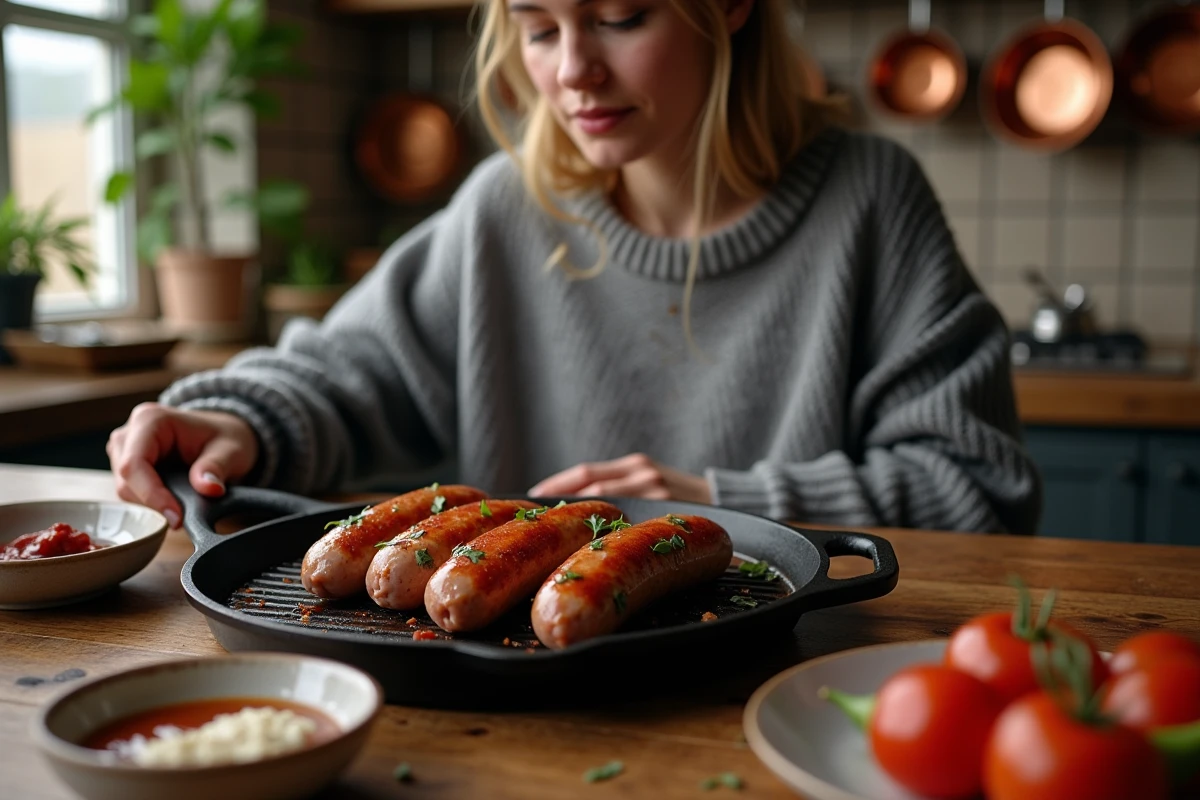
Practical tips and answers to common questions for successful reheating without a hitch
A successful reheating primarily relies on temperature control. To ensure food safety, the merguez must reach 74-75°C at the core. A kitchen thermometer makes a difference: quick, accurate, it prevents any excess heat responsible for loss of tenderness.
Here are some reflexes to adopt to avoid mistakes:
- Never pierce the merguez: the casing acts as a shield, retaining moisture and fat. Piercing opens the door to dryness.
- Add a splash of water or broth to the dish before reheating in the oven or frying pan. Cover: the humid environment allows the merguez to remain tender without diluting its flavor.
Remember to store leftovers in the refrigerator, never more than four days. Cool quickly after cooking, and only reheat once. If the merguez comes from the freezer, let it thaw slowly in the refrigerator: this waiting time preserves the texture and avoids thermal shock that dries out the meat.
Accompaniments also deserve attention. For gratin, rice, or pasta, add a bit of water and cover to maintain moisture. A gently reheated sauce dish enhances the merguez without rushing it. Fries or roasted meats, on the other hand, appreciate a brief return to a low oven under aluminum to avoid unnecessary drying out.
In the end, it all comes down to the precision of the gesture and the accuracy of the temperature. A properly reheated merguez brings back pleasure with every bite, without compromising on texture or indulgence. Who would have thought that a simple detail could change everything so much?