
When a pediatrician refers to your child as an “infant,” they do not choose this word randomly. This term refers to a specific age range, defined by the World Health Organization, which conditions medical follow-up, dietary recommendations, and growth charts used. Understanding where this period begins and ends helps to better read a health record and communicate with professionals.
Why the neonatal period is not the same as the infant period
Before discussing infants, it is essential to establish a boundary that is often poorly understood. The neonatal period covers the first 28 days of life. During these four weeks, the newborn is subject to specific monitoring: primitive reflexes, initial weight gain, mandatory screenings.
Once this milestone is passed, the child enters the category of infants. If you want to know what an infant is according to the WHO, the answer can be summed up in one sentence: it is a child aged 0 to 12 months, including the neonatal period.
Why does this distinction matter in everyday life? Because infant mortality indicators, for example, are calculated over the first year of life. Neonatal data (the first 28 days) are included, but they are also the subject of separate statistics. Confusing the two skews the reading of public health assessments.
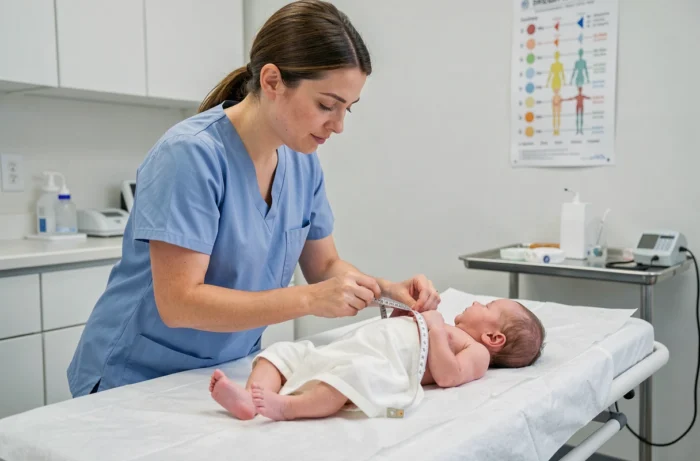
Infant, baby, young child: age limits according to the WHO
In everyday language, “baby” and “infant” seem interchangeable. In a medical context, each term corresponds to a distinct age range.
- Newborn: from birth to the 28th day of life. A transitional phase between intrauterine life and the outside environment.
- Infant: from birth to 12 months. The word refers to the notion of being fed, in reference to breastfeeding, but it now applies regardless of the feeding method.
- Young child: from 12 months to 3 years according to the classification used by the WHO in its recommendations on infant and young child feeding.
Did you notice that “infant” and “newborn” overlap? That’s normal. Every newborn is an infant, but not every infant is a newborn. The first term describes a subset of the first four weeks within the first year.
The specific case of age classes in pharmacology
The ANSM (French National Agency for the Safety of Medicines and Health Products) uses its own age classes to evaluate pediatric medications. The age range selected for a clinical trial may not exactly coincide with that of the WHO. Before administering a treatment, the reflex to adopt is to check the age range indicated on the package insert, rather than relying on a general category.
Growth and feeding of infants: what the WHO really recommends
The definition of an infant is not just of theoretical interest. It structures two pillars of medical follow-up: growth charts and dietary recommendations.
Growth charts adapted to sex and age
The WHO has published reference curves based on breastfed and healthy children from several countries. Weight, height, and head circumference are related to the child’s age and sex. An isolated number means nothing: it is the trajectory over several months that matters.
These curves serve as a detection tool. A deviation from the reference curve may indicate a nutritional disorder or a health problem, but it does not constitute a diagnosis by itself. The healthcare professional always cross-references the measurement with the clinical examination.
Breastfeeding and complementary feeding
The WHO and UNICEF recommend putting the infant to the breast within the hour following birth. Exclusive breastfeeding is recommended for the first six months of life. After that, safe and appropriate complementary foods are gradually introduced, while continuing breastfeeding until two years or beyond.
These guidelines are not arbitrary. According to data published by the WHO, half of the deaths of children under five are attributable to malnutrition. The organization estimates that exclusive breastfeeding for six months, followed by continued breastfeeding, could prevent nearly 400,000 deaths per year among children under five.

Public health issues related to the 0-12 month age range
Knowing that an infant corresponds to the 0-12 month range helps to understand why this year concentrates so many mandatory consultations and prevention campaigns.
The consequences of poor nutrition during the first year include weakened immunity, cognitive disorders, and growth delays. Conversely, early overfeeding can predispose to obesity, diabetes, or metabolic syndrome later in life.
In 2024, the WHO estimated that 150 million children under five were stunted, 43 million were wasted, and 36 million were overweight. These figures concern a broader range than just infants, but it is indeed during the first year that nutritional foundations are laid.
Early care and detection of difficulties
The close monitoring of infants (monthly visits, regular weigh-ins, vaccination follow-up) exists because the 0-12 month window is when early intervention has the most impact. A growth delay detected at three months is easier to correct than one identified at two years.
The issue goes beyond the individual level. Public health policies, WHO recommendations to governments on supporting breastfeeding, standards for infant formula composition: everything relies on this age definition to target actions at the right time.
The definition of an infant according to the WHO is therefore not just a simple semantic reference. It delineates a critical year, the one where nutrition, growth monitoring, and early care condition the long-term health of the child. Keeping this framework in mind helps to ask the right questions during each pediatric consultation.