Organizing a wedding typically involves about ten months of preparation and numerous intertwined decisions. The venue determines the caterer, the caterer influences the budget, and the budget redefines the guest list. Understanding this chain of events helps to gain peace of mind and avoid last-minute compromises that can dampen the experience.
Quiet weddings and extended formats: two trends changing the organization
Have you noticed that weddings seem to be getting more intimate around you? It’s no coincidence. The phenomenon of quiet weddings, documented by TF1 Info in September 2026, describes couples who intentionally reduce their guest list to focus their budget on the quality of the experience: better venue, gourmet menu, refined decoration.
The idea is not to spend less. Many of these couples maintain a total budget comparable to that of a traditional wedding. They simply redistribute the expenses.
At the same time, weddings are no longer limited to a single day. According to the Vows & Venues study by Hyatt, reported by Gala in September 2026, the two-day format with a brunch the next day is gaining traction. This choice extends the time spent with loved ones, but it also requires booking a venue capable of hosting multiple successive highlights.
To structure these initial thoughts and compare possible formats, you can consult Mariage et Mariages online to identify the right service providers for each configuration.
Wedding budget: three areas to prioritize before anything else
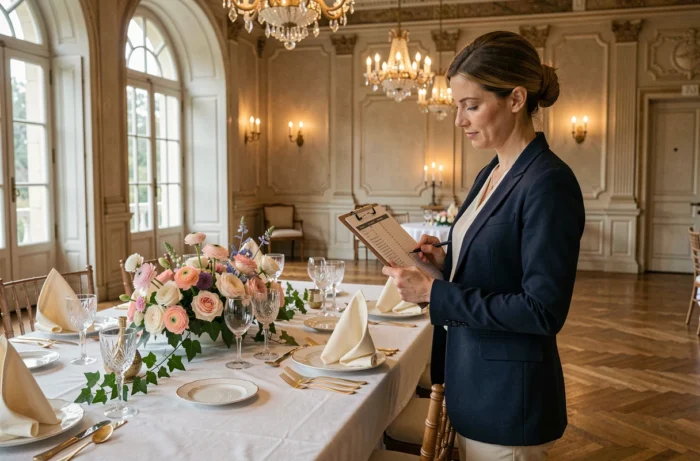
Most guides offer a comprehensive budget table. The problem is that each line taken in isolation seems reasonable, while the total can quickly escalate. It’s better to think in terms of priority blocks.
The venue absorbs the largest share
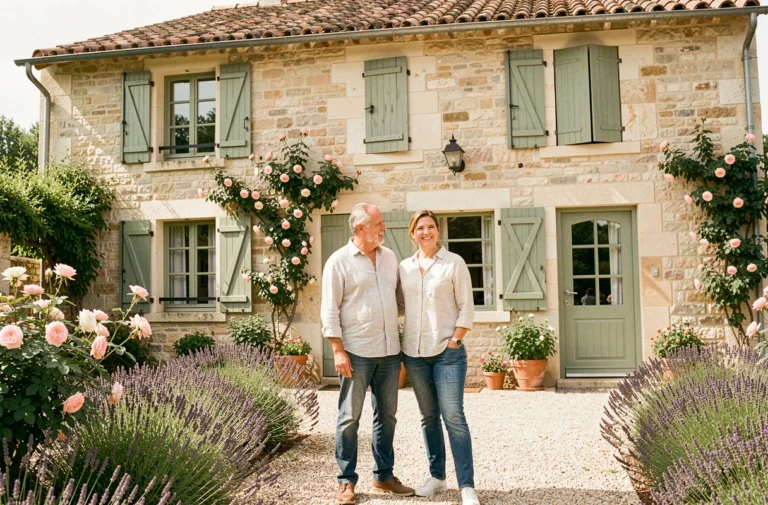
The venue generally represents the heaviest expense. It also determines the logistics: an isolated estate requires a caterer with a mobile kitchen, while a downtown hall allows for a simpler dinner cocktail. Choosing the venue first simplifies all subsequent decisions.
Be sure to check what the price includes: tables, chairs, parking, on-site accommodation. Some estates charge extra for these items, which skews the initial comparison.
Caterer and beverages: the least compressible expense
Reducing the number of guests remains the most effective lever for this expense. A four-course menu for fifty people often costs less than a buffet for one hundred twenty guests, with a superior taste result.
Photographer, videographer, and content creator
The Vows & Venues study by Hyatt, cited by the Journal des Femmes in September 2026, highlights the emergence of a new service provider: the wedding content creator. Their role differs from that of a traditional videographer. They produce short formats that can be shared on social media the same day, in addition to the traditional photo report.
If this area interests you, integrate it into the provider selection phase to avoid overlaps with the photographer.
Building a realistic wedding timeline
A linear timeline (month 1, month 2, month 3) works poorly because it ignores the dependencies between decisions. A backward timeline, on the other hand, starts from the big day and works backward.
Here are the milestones that structure most preparations:
- Ten to twelve months before: set the overall budget, choose the format (one day, two days, civil or religious ceremony), visit venues and secure the date.
- Six to eight months before: confirm caterer, photographer, and officiant. Send save-the-dates to guests. Start trying on the bride’s or groom’s outfit.
- Three months before: finalize the seating plan, validate the decoration, organize the rehearsal if the ceremony is civil. Order the rings.
- One month before: confirm the guest count with the caterer, prepare logistical elements (transport, accommodation for distant guests), delegate tasks for the big day to the witnesses.
This breakdown is not rigid. A wedding organized in less than six months is entirely possible, provided you reduce the number of service providers and prioritize the three budget blocks mentioned earlier.
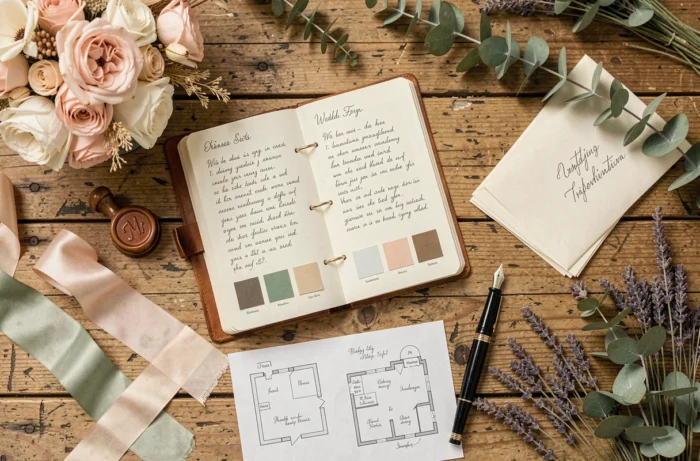
Civil or religious ceremony: what the choice concretely implies
The civil ceremony is increasingly appealing to couples because it offers total freedom over the content, location, and duration. However, it requires more personal preparation.
Writing vows, choosing speakers, defining musical moments: each element relies on the couple or an officiant hired for the occasion. Count at least two to three months of preparation dedicated solely to the ceremony.
A religious ceremony, on the other hand, follows a pre-established framework. Preparation focuses on exchanges with the celebrant and administrative formalities (marriage file at the town hall, publication of the banns). There is room for personalization, but it is within a protocol.
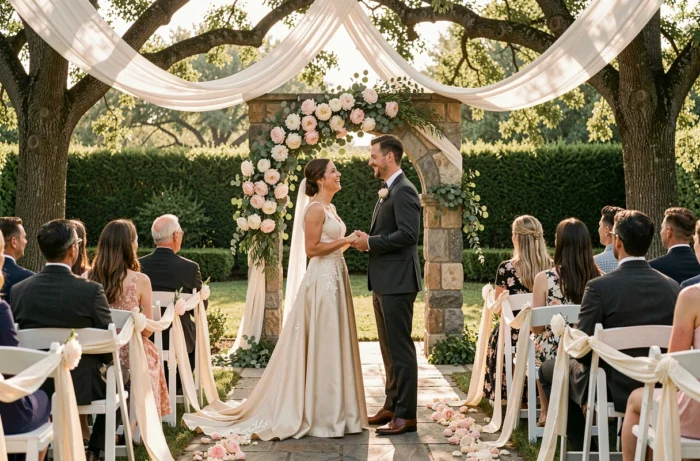
Why should this choice be made early? Because it determines the venue, schedule, and duration of the day. An outdoor civil ceremony requires a weather backup plan, a sound system, and often a specific decor.
Decoration and ambiance: focusing on coherence rather than quantity
The most successful decoration is one that extends the venue rather than masks it. A dry stone estate doesn’t need draping, and a flower-filled garden can do without monumental floral arrangements.
Concentrate the decoration budget on two or three focal points: the head table, the ceremony space, and the entrance of the venue. The rest can remain understated. This approach aligns with the logic of a quiet wedding.
For guests, the atmosphere is also built through lighting (string lights, candles, lanterns) and music. These two elements cost relatively little but radically transform the ambiance of an evening.
A wedding that reflects you doesn’t come from accumulation but from deliberate choices on a few details that truly matter to you.