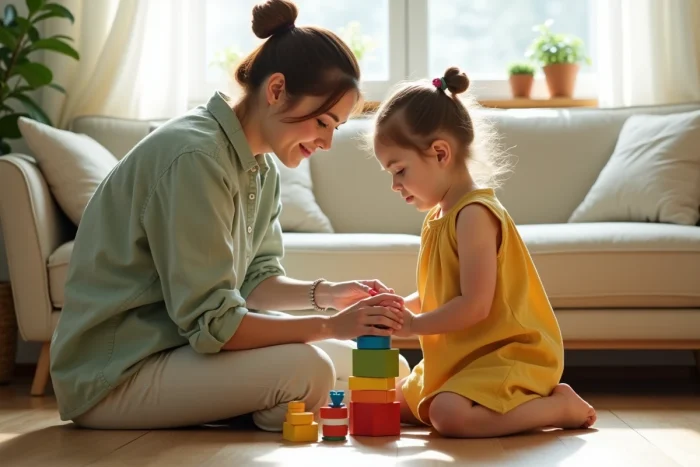
Since 2020, healthcare professionals have observed a notable increase in anxiety disorders and depressive symptoms among children and adolescents in France. Santé publique France and INSERM confirm that this trend has only partially stabilized. In this context, supporting your child’s growth and well-being on a daily basis goes beyond traditional advice on sleep or nutrition. Mental health has become a key aspect of parenting.
Psychological distress in children: what recent data shows
Field reports vary on the exact extent of the phenomenon across age groups, but the direction is clear. UNICEF and WHO describe an international trend comparable to that observed in France, with a strong recommendation: parents must learn to recognize the early signs of distress.
Three signals deserve particular attention:
- A gradual social withdrawal, when the child refuses activities they previously enjoyed or isolates themselves from peers for no apparent reason.
- Persistent sleep disturbances (difficulty falling asleep, repeated night awakenings, marked daytime fatigue) that cannot be explained by a change in school schedule.
- A irritability lasting several weeks, distinct from age-related tantrums, and sometimes accompanied by somatic complaints (stomachaches, headaches).
Identifying these signals does not mean making a diagnosis. However, it allows for consulting a professional before the situation crystallizes. The most useful reflex remains to name what is observed, without dramatizing, and to offer a space for the child to speak.
To explore available resources on parenting and child development, you can discover the site astuces-parents.com which addresses these topics from various practical angles.

Screens and child well-being: what has changed in recommendations
The issue of screens has long been reduced to a number of hours per day. Updated recommendations in 2024 from the American Academy of Pediatrics and WHO mark a turning point. The focus shifts to the quality of use rather than raw duration.
In practical terms, a child watching a wildlife documentary with a parent for forty minutes does not have the same experience as a child alone in front of a stream of short videos. Co-viewing, the type of content, and the time of day matter more than a timer.
Concrete points of attention for parents
The impact on sleep remains the most reliable criterion for assessing whether screen use is problematic. A child who has difficulty falling asleep after using a tablet in the evening experiences a measurable disruption of their circadian rhythm. Removing screens in the hour before bedtime produces visible effects in a few days.
Physical activity is another variable to monitor. A child who systematically replaces outdoor free play with screen time loses a direct lever for emotional regulation. Physical play remains the primary stress regulator in children, and no app can replace it.
The available data do not allow for a conclusion on a universal threshold applicable to all ages. What works, however, is to observe the concrete effects on the child’s behavior and adjust accordingly.
Self-confidence and autonomy: what developmental psychology research specifies
Self-confidence in children is not decreed. It is built through a series of experiences where the child realizes they can act on their environment. Developmental psychology research identifies two main levers.
The first is the ability to make age-appropriate choices. A four-year-old choosing their clothes in the morning exercises a micro-decision-making power. An eight-year-old organizing their bag for an outing develops a skill of anticipation. Autonomy is built in stages, not through grand educational declarations.
The second lever concerns emotional management. Internationally documented SEL (Social and Emotional Learning) programs show that naming emotions reduces their perceived intensity. Parents who regularly verbalize emotional states (“you seem frustrated because your drawing doesn’t look like what you wanted”) provide the child with internal vocabulary that helps them regulate themselves.
What this changes in daily life
In practice, this means accepting that the child may fail at certain tasks. A parent who systematically remakes the “poorly done” bed of their six-year-old sends an implicit message of incompetence. Allowing the imperfect result, then valuing the effort, sustainably boosts self-esteem.
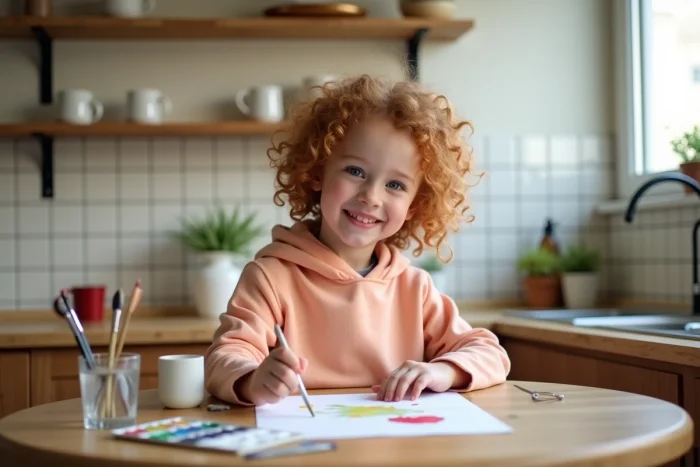
Creative activities (drawing, building, role-playing) play a particular role in this process. They allow the child to experiment without the stakes of academic performance, in a setting where mistakes don’t really exist.
Child flourishing in daily life: the limits of standardized approaches
Parenting guides often offer lists of universal best practices. Field reports vary on this point: what works for an introverted child does not produce the same effects on an extroverted child. A highly sensitive child will react differently to a strict framework than a child with a more flexible temperament.
Recent research on temperament and differential sensitivity suggests that some children are more receptive than others to their environment, both positively and negatively. A warm home will have an amplified effect on a highly sensitive child, but a tense environment will also affect them more strongly.
This variability explains why no single educational method can claim to suit all profiles. Careful observation of one’s own child, their reactions, and their specific needs remains the best tool a parent has. General advice provides a useful framework, but it is the daily, patient, and imperfect adjustment that produces the most tangible results on the child’s well-being.