The home and garden trends for 2026 are structured around two technical axes: reducing the carbon footprint of landscaping materials and adapting gardens to increasing water constraints. These developments are concretely changing the choice of products in DIY stores, the design of outdoor spaces, and daily maintenance practices.
Low-carbon materials for patios and gardens: what changes in 2026
The segment of outdoor landscaping materials is undergoing a shift. Several French manufacturers, including Lafarge France, Hoffmann Green Cement, and Saint-Gobain, are now marketing low-carbon concretes and mortars directly aimed at consumers.
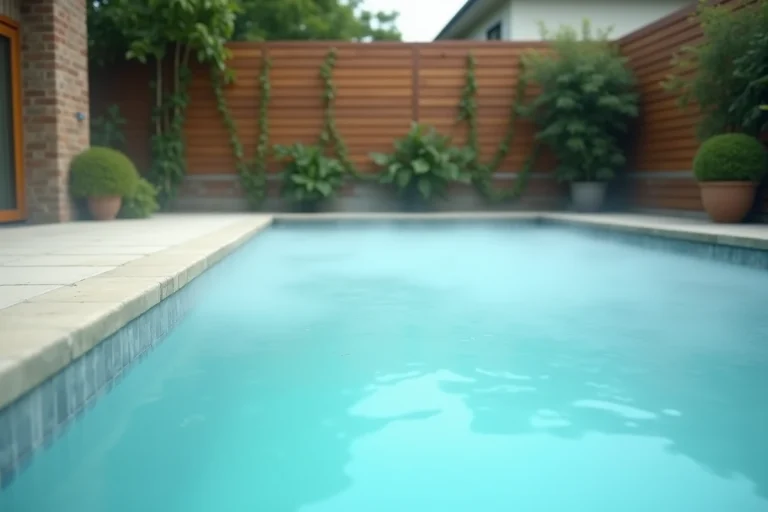
These ranges no longer concern professional heavy construction. They target patio slabs, permeable pavers, borders, and small garden structures. They can be found in the aisles of Leroy Merlin and Castorama, with specific “low carbon” labeling on the 2025-2026 catalogs.
For those planning to redo a driveway or install a patio, choosing a low-carbon material represents an area where it is possible to learn more on Maisons et Conseils in order to compare available options based on their project.
The shift from professional construction to the consumer market also means that prices are gradually approaching those of traditional materials. Permeable pavers, in particular, serve two functions: reducing the carbon footprint of the site and managing runoff water, a point that directly relates to the issue of water in the garden.
Watering restrictions and garden design: rethinking plantings
Since 2022, drought orders have multiplied each summer in France. Many departments now impose limited time slots for watering, or even a temporary ban on watering lawns and non-productive flower beds. In 2024 and 2025, these restrictions have strengthened in many areas.
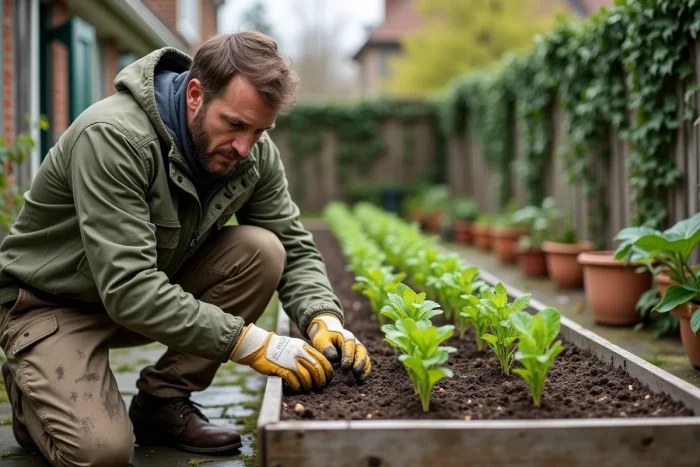
This regulatory reality is changing the very design of private gardens. Maintaining a uniform English lawn becomes a risky bet when watering can be cut off for several weeks in a row during the summer.
Drought-resistant plants: selection criteria
The choice of plants for a garden adapted to water restrictions relies on a few specific technical parameters:
- A deep root system, characteristic of Mediterranean plants (lavender, rosemary, santolina), which allows them to capture residual soil moisture even in dry periods.
- Persistent foliage with a low leaf area, which limits evapotranspiration. Ornamental grasses (blue fescue, stipa) meet this criterion well.
- The ability to enter summer dormancy, specific to certain perennials that stop growing in summer without dying, then resume in the fall.
A garden designed around these criteria requires almost no watering after two seasons of rooting. Mineral or organic mulching complements the system by reducing soil evaporation.
Rainwater harvesting: a trend that has become a technical reflex
In response to restrictions, rainwater harvesting systems are becoming widespread in French gardens. The principle is simple: collect water from roofs via gutters and store it in tanks for later use (watering, outdoor cleaning).
The storage capacity must be sized according to the available roof area and the actual needs of the garden. A modest-sized vegetable garden does not require the same reserve as an ornamental garden of several hundred square meters.
Buried tank or above-ground tank: two distinct approaches
The above-ground tank remains the most accessible solution. It connects directly to a downspout and requires no excavation. Its limit: the capacity, often modest, and exposure to frost in winter.
The buried tank offers a much larger storage volume and protects the water from frost and heat. Its installation requires excavation work and a more significant initial investment, but it integrates seamlessly into the garden without visible clutter.
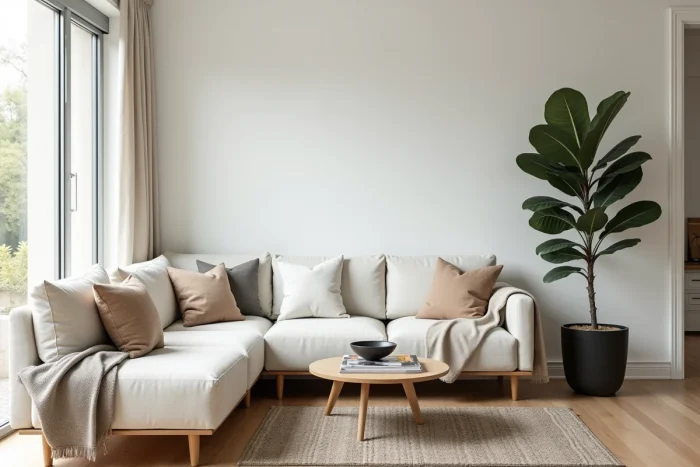
Interior decoration and trendy colors for 2026: the return of muted tones
On the home front, the 2026 color palettes for interior decor confirm a movement that has been underway in recent years. Bright, saturated hues are giving way to muted, earthy, and natural tones: muted terracotta, sage green, stone beige, clay brown.
This palette aligns with the growing use of raw materials in decoration: untreated wood, natural stone, linen, artisanal ceramics. The connection between interior and exterior is strengthened when the same tones are found from the living room to the terrace.
Living room furniture and sustainable design
Furniture follows the same logic. Solid wood pieces, seating in natural fibers, and lighting made from recycled materials are gaining ground in the catalogs of decoration brands in France.
The criterion of durability goes beyond mere marketing. A well-maintained solid wood piece can last several decades, while an equivalent in particle board rarely reaches ten years. The purchase cost is higher, but the long-term usage cost decreases.
- Choosing certified woods (PEFC, FSC) ensures a source from sustainably managed forests.
- Check the finishes: natural oil is easy to renovate, while synthetic varnish is less so.
- Second-hand and refurbished furniture is experiencing strong growth on specialized resale platforms for lifestyle and decoration.
The home and garden trends for 2026 converge towards a common thread: choices of materials, plants, and design that take into account real climatic and regulatory constraints. A garden that withstands a summer without watering and a patio laid with low-carbon slabs are no longer a militant stance, but a practical decision in light of current conditions.