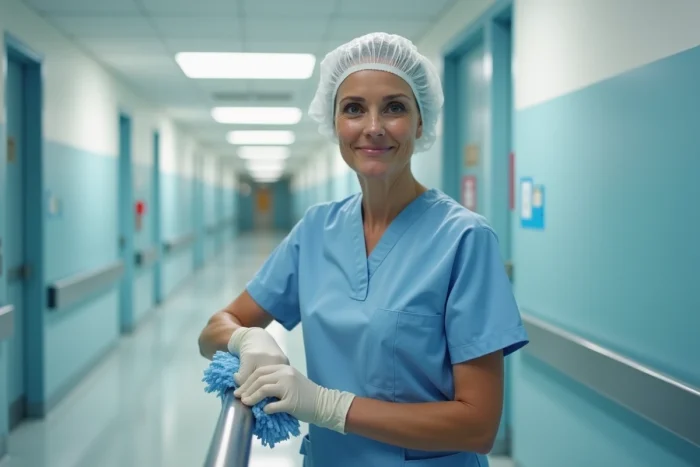
It is impossible to confuse a hospital service agent and a qualified agent if one closely examines their pay slip. However, in the field, the boundary remains porous and often misunderstood, even in the corridors of healthcare facilities.
In the hospital sector, recruitment does not always follow a uniform logic. From one facility to another, the required training varies, just like the selection criteria. This diversity concretely shapes the careers of agents: some quickly gain additional responsibilities, while others see their prospects limited by a lack of official recognition. Access to the profession, opportunities for advancement, and remuneration are directly impacted by these differences in status.
Understanding the role and importance of hospital service agents in the healthcare sector
Behind the scenes, hospital service agents (ASH) and qualified hospital service agents (ASHQ) orchestrate the cleanliness and safety of healthcare facilities. Their presence is reassuring: every clean room, every disinfected corridor bears the mark of their commitment. Hygiene is not a detail: it protects patients, supports staff, and contributes to the overall quality of care. The actions are precise, codified, and repeated tirelessly. Maintenance protocols leave no room for improvisation, as the prevention of hospital infections requires constant vigilance.
The distinction between ASH and ASHQ profoundly structures the functioning of services. The difference between an ASH and an ASHQ is not anecdotal: the ASH takes care of daily cleaning, linen management, logistics, and sometimes hotel reception. The ASHQ, holding a diploma or backed by solid experience, manages more specialized interventions such as bio-cleaning of at-risk rooms or disinfection of operating rooms. This organization extends to medico-social establishments and nursing homes, where versatility remains valuable to face all situations.
Here are some concrete examples of the missions entrusted to hospital service agents:
- maintaining cleanliness in care areas,
- preventing the spread of microorganisms,
- supporting nursing staff on a daily basis.
Their often discreet actions condition the health safety of all users. Facilities could not function without their rigor and involvement at every link in the care chain.
ASH or ASHQ: what are the concrete differences in daily life?
At the heart of hospitals, the boundary between ASH and ASHQ materializes in the technicality of tasks and in the professional recognition granted. The hospital service agent is involved in routine maintenance: they clean rooms, disinfect surfaces, manage linen, and clear meal trays. These essential actions ensure a healthy environment for both patients and medical teams.
The ASHQ, on the other hand, justifies skills certified by a diploma or recognized experience. They handle complex situations: bio-cleaning in sensitive areas, handling specific products, adhering to strict protocols in the operating room. Often, they supervise newcomers, oversee the quality of operations, ensure the prevention of nosocomial infections, and support the hygiene projects of the facility.
| ASH | ASHQ |
|---|---|
| Routine maintenance, cleanliness, logistics | Bio-cleaning, specialized disinfection, supervision |
| No diploma required | CAP, experience or VAE |
| Basic salary scale | Higher remuneration, qualified grade |
The daily life of a hospital agent therefore depends on their qualification. Over time, they can access more responsibilities, receive training, and evolve into a different hierarchical position. The collaboration between ASH and ASHQ enhances the quality of service provided in all healthcare facilities.

Pathways, skills, and opportunities: how to train and evolve in these professions?
The job of a hospital service agent is accessible without an initial diploma. Commitment, punctuality, and seriousness make the difference at hiring. Experience gained on the ground is often valued: many facilities offer internal training to ensure mastery of safety protocols and adherence to hygiene rules. Over time, these skills strengthen: waste management, equipment maintenance, adherence to procedures, and relationships with patients and medical teams.
To obtain the status of ASHQ, several options are available: obtaining a CAP in cleanliness and hygiene, validating experience with a VAE, or receiving professional recognition from the facility. This grade allows for specialization in bio-cleaning, using advanced techniques, or managing stocks of disinfectant products. Qualified agents work in various environments: hospitals, clinics, nursing homes, and medico-social structures.
Here are the main pathways for evolution and training available to these professionals:
- Continuous training and regular adaptation to changes in health standards.
- Opportunity to lead a team or organize the coordination of hygiene operations.
- Internal mobility between different services: care, rehabilitation, medico-social sector, long-term care.
Salary levels vary depending on the position held, the diploma obtained, and seniority. Qualified agents benefit from a more advantageous salary scale, reflecting their expertise and increased responsibilities in the care chain.
In the hospital world, the difference between ASH and ASHQ is not just a line on a contract: it is experienced daily, in every action and every decision. The question remains whether, tomorrow, recognition will follow the reality on the ground.