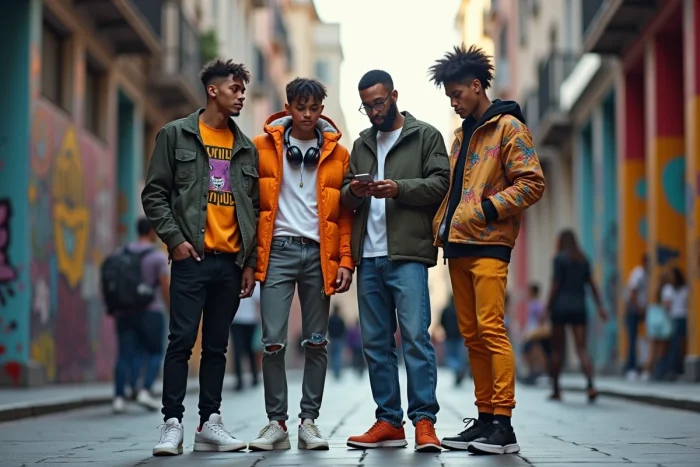
A brand logo can go viral even before a song climbs the charts. Some labels now impose aesthetic codes on their artists, dictating the color of a parka or the typography of a t-shirt on stage.
Collaborations between fashion designers and musicians no longer follow the traditional cycles of collections. An unexpected drop can disrupt the established order, drawing attention to new neighborhoods, new styles, and new codes. The boundaries blur between influencers, designers, and producers, each injecting their references into the streets as well as into playlists.
Urban culture, a creative crossroads between music, fashion, and design
It is impossible to ignore the power of urban culture: it draws unprecedented lines, breaking down the classic barriers between fashion, music, and art. Here, the street debates with the runways, studios blend with workshops, and young creators set their tempo on new trends. Streetwear is no longer just a clothing trend: it now embodies the foundation of urban fashion. Loose silhouettes, innovative textiles, logos worn with confidence: every detail asserts an identity, borrowing from the codes of neighborhoods as well as from the heritage of luxury and design. Collaborations between designers and artists shake up the hierarchy: a signature sneaker can define an era just as much as a cult hit.
Now, following fashion trends is no longer just about consumption. Issues of responsible consumption and urban well-being are gaining prominence. Many creators are mobilizing around mental health or sustainability, re-examining the social significance of clothing and objects. Even urban mobility influences cuts and materials, adapted to the fast pace of big cities.
To better grasp the new currents and understand the strategies of streetwear brands, reading the latest on JD Mag allows you to decode the approaches of industry players and analyze the rise of collaborations that are reshaping the scene. Urban culture is written, reinvented, and shared at the crossroads of disciplines and perspectives.
What influences are shaping streetwear and music trends this season?
The mutation of streetwear is accelerating, driven by a multitude of references. Social media dictates an unprecedented tempo: each new piece, each association, spreads rapidly, shaping the stylistic landscape and imposing new rules. In terms of fashion styles, inspirations oscillate between the breath of the 90s and the boldness of current urban graphics.
Everywhere you see bright colors, striking patterns, technical materials, worn on silhouettes directly inspired by skate or hip-hop scenes. Music remains a driving force, a driving force of urban fashion: rap, drill, electro, each genre leaves its mark on cuts and accessories. Artists no longer just embody an image; they move to creation, signing capsules, imposing their vision.
Here are some strong dynamics to remember this season:
- Fashion-music collaborations are multiplying, erasing the distinction between the stage and the street.
- Some clothing styles, popularized by musical figures, directly inspire the market.
- The nostalgia of past decades, revisited in an urban way, structures a good part of current trends.
This constant back-and-forth of influences leads to a permanent hybridization. Urban culture establishes itself as a true laboratory, where music and fashion intertwine to create silhouettes that express both belonging to a scene and the desire to stand out.
When the street inspires: origins, evolutions, and debates around new urban codes
Streetwear is no longer just a passing trend: it has risen to the rank of a pillar of urban style. Its DNA draws from the margins, where urban culture is built, between mural art and disruptive music. Nothing is fixed: this current shapes itself through exchanges, confrontations, and borrowings from hip-hop, skate, or graphic design.
Streetwear brands exploit this pool, revisiting the codes of clothing style to respond to a generation that erases the boundaries between fashion and art. Recent years have proven it: the multiplication of collaborations between designers and artists has transformed the landscape. Sneakers, once simple accessories, have become manifestos, signs of recognition and affirmation.
Here are the major axes that traverse this phenomenon:
- Streetwear now stands as a reference in urban fashion.
- Urban fashion styles reflect a continuous mixing with visual arts and music.
- A debate on responsible consumption animates the community, questioning the social and ecological impact of these emerging codes.
This creative effervescence is not without provoking debates. Some point to commercial appropriation, while others welcome the birth of a space for expression for multiple identities, social claims, or simply for urban flourishing. Urban fashion defends its roots while seeking a balance between the sincerity of expression and commercial realities.
The street has not said its last word: it reinvents itself, again and again, where it is least expected.